

You run a brief through a plagiarism checker. It comes back clean. So you file it. Then opposing counsel points out that two of your cited cases don't exist. Not misquoted. Not paraphrased. Just entirely made up by the AI tool you used for research.
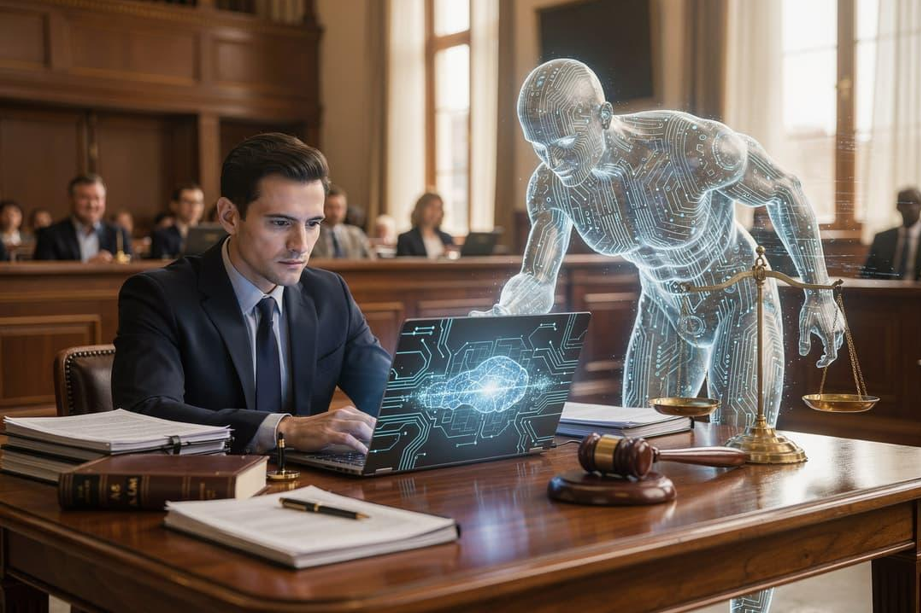
This is the hallucinated citation problem, and it's happening more than most lawyers realize. AI hallucinations occur when large language models produce content that appears authoritative and well-reasoned but is factually incorrect or entirely fabricated. In legal work, that means invented case names, non-existent judicial opinions, and made-up precedents that look completely real on the page.
The dangerous part isn't just that these citations are false. It's that the tools most lawyers reach for to check their work, standard plagiarism detectors, are completely blind to them. Here's why.
The Limits of Traditional Plagiarism Checkers
Plagiarism checkers do one thing well: they find copied text. They break your document into segments, scan those segments against a database of existing content, and flag matches. The higher the match percentage, the more likely something was lifted from another source.
That's a useful function for catching copied essays or recycled briefs. But it's built on a core assumption: that the problem content already exists somewhere. The tool needs something to match against.
Fabricated citations break that assumption entirely. A hallucinated case name has never appeared in Westlaw, LexisNexis, or any court database. There's no source to match it to. So the plagiarism checker sees original text, finds no matches, and reports everything as clean. From its perspective, the document is fine.
As one expert put it, these tools aren't tracking accuracy at all. They're just flagging matching text. If the text doesn't match anything, it passes, regardless of whether it's true.
How Hallucinated Citations Arise
To understand why hallucinated citations are so common, you need to understand how AI language models actually work. They don't look things up. They predict text. Based on patterns in their training data, they generate the words most likely to follow the words before them.
When you ask a generic AI tool for case law supporting a legal argument, it doesn't search a verified database. It produces text that looks like a legal citation because it has seen thousands of legal citations in its training data. The result can be a perfectly formatted, entirely fictional case.
Generic AI models are trained on vast amounts of internet content, not on authoritative legal sources. They rarely have access to the actual case law, statutes, and regulations that lawyers need. So when pressed for specific legal authority, they fill in the gaps with plausible-sounding fabrications.
Speed pressure makes this worse. AI tools promise fast research results, and lawyers under deadline pressure may not slow down to verify every citation before it ends up in a filing. The Mata v. Avianca case in 2023 is the most cited example: a lawyer used ChatGPT for research, the AI generated six completely fabricated case citations, and the lawyer filed them. The court sanctioned the attorney and imposed a $5,000 fine.
That case made headlines. But it wasn't a one-off. More than 300 cases of AI-driven legal hallucinations have been documented since mid-2023, with at least 200 recorded in 2025 alone.
Why Standard Tools Fail to Detect Hallucinated Citations
The core problem is that hallucinated case law is original content. The case names sound plausible. The citation format looks correct. But when you search for them in Westlaw, LexisNexis, or any authoritative database, they don't exist.
Because AI generates these citations by predicting text patterns rather than retrieving real information, the false citations follow the same stylistic and structural conventions as real ones. They're indistinguishable from legitimate citations to any tool that checks only form, consistency, or similarity to existing text.
Plagiarism checkers have no access to specialized legal databases. They can't query Westlaw to confirm a case exists. They can't check whether a cited holding accurately reflects what a court actually said. They operate entirely at the surface level, looking for copied strings of text, and hallucinated citations aren't copied from anywhere.
Even sophisticated citation formatting tools have limits here. Our own CiteCheck feature in BriefCatch Next is an automated citation correction engine. It fixes capitalization, punctuation, spacing, court and reporter abbreviations, and pinpoint page references. It's designed to be precise and rule-based, like a grammar checker for citations. But it corrects formatting and style, not authenticity. A hallucinated citation with perfect formatting will pass through a formatting check without issue.
That's not a flaw in the tool. It's a clear boundary. And it's why we're explicit with lawyers: verify the substance of each citation. Check that cases exist, that they support your argument, and that they haven't been overruled. No automated system replaces that step.
The numbers reinforce how serious this is. Stanford research found that Westlaw's AI-Assisted Research produced incorrect information more than 34% of the time. Even specialized legal AI tools show hallucination rates between 17% and 34%. That's not a rare edge case. That's a systemic risk that demands a systemic response.
Finding Smarter Solutions for Reliable Citations
The answer isn't to stop using AI. It's to stop treating AI output as finished work product. Here's what actually helps:
Verify every citation in an authoritative database. Before any brief, memo, or filing leaves your desk, every cited case should be confirmed in Westlaw or LexisNexis. Check that it exists, that it says what you claim it says, and that it hasn't been overruled. This is non-negotiable.
Use dedicated citation-verification technology. Tools designed specifically to flag hallucinated citations go further than plagiarism checkers. They check whether citations actually exist in legal databases, not just whether the text matches something online. Look for platforms that provide audit trails showing systematic verification of every citation in a document.
Treat AI output like a draft from a junior associate. That means thorough review, not a quick skim. AI can help you identify relevant areas of law and draft initial arguments, but every factual assertion and every cited authority needs human verification before it goes anywhere official.
Choose legal-specific AI platforms over generic ones. Generic AI tools create serious risks because they're trained on general internet content, not authoritative legal sources. Specialized legal AI platforms are built on case law, statutes, and regulations, and they're designed with confidentiality requirements in mind.
At BriefCatch, every rule and recommendation reflects techniques drawn from thousands of elite legal documents and judicial opinions, not scraped internet data. And our AI features are completely optional and defaulted off, because whether to enable those features is always your call. We also don't store your data, so your work product stays yours.
Advocating for a New Standard of Accuracy
The legal profession has always demanded accuracy. AI doesn't change that standard. It just creates new ways to fall short of it.
Hallucinated citations are now a known, systemic risk. Courts are sanctioning lawyers who file AI-generated fake citations. Reputations are taking hits. And the tools most lawyers assume will catch these errors, plagiarism checkers, simply aren't built for the job.
The new standard is straightforward but demanding. Assume hallucinations are possible in any AI-generated content. Verify every citation independently, regardless of how polished it looks. And understand that tools working at the level of style or formatting are not substitutes for substantive research.
Even if hallucination rates drop significantly, that doesn't reduce the verification requirement. As we've noted before, if error rates drop to 1%, that still means 100% of AI-generated answers need verification.
Professional judgment can't be delegated to software. Lawyers remain accountable for all work product, regardless of how it was generated. That accountability is what makes verification not just a best practice but an ethical obligation under ABA Model Rule 1.1.
If you want a platform that helps you write more clearly and precisely while keeping you in control of every editorial decision, try BriefCatch free or book a demo to see how it fits into your workflow. Better writing and reliable citations aren't competing goals. They're both part of doing the job right.

.svg)

.svg)

.svg)

.svg)